
in the ever-evolving landscape of robotics and automation, the quest for versatile and efficient components drives innovation at every turn. Among thes game-changers are pin micro servo drivers—compact, yet powerhouse components that unlock a realm of possibilities for creators and engineers alike. These tiny titans of technology not only offer precise control and smooth movement but also adapt seamlessly to an array of applications, from hobbyist projects to intricate industrial systems. In this article, we delve into the fascinating world of pin micro servo drivers, exploring their intricate mechanics, diverse functionalities, and the myriad ways they empower designers to bring their visions to life. Join us as we uncover the true potential of these remarkable devices and examine how they are reshaping the future of motion control.
Table of Contents
- Exploring the Mechanisms behind Pin Micro Servo Drivers
- Enhancing Project Flexibility with Versatile Servo Applications
- Selecting the Right Pin Micro Servo Driver for Your Needs
- Optimizing Performance: Tips for Effective Integration and Usage
- Q&A
- To Conclude
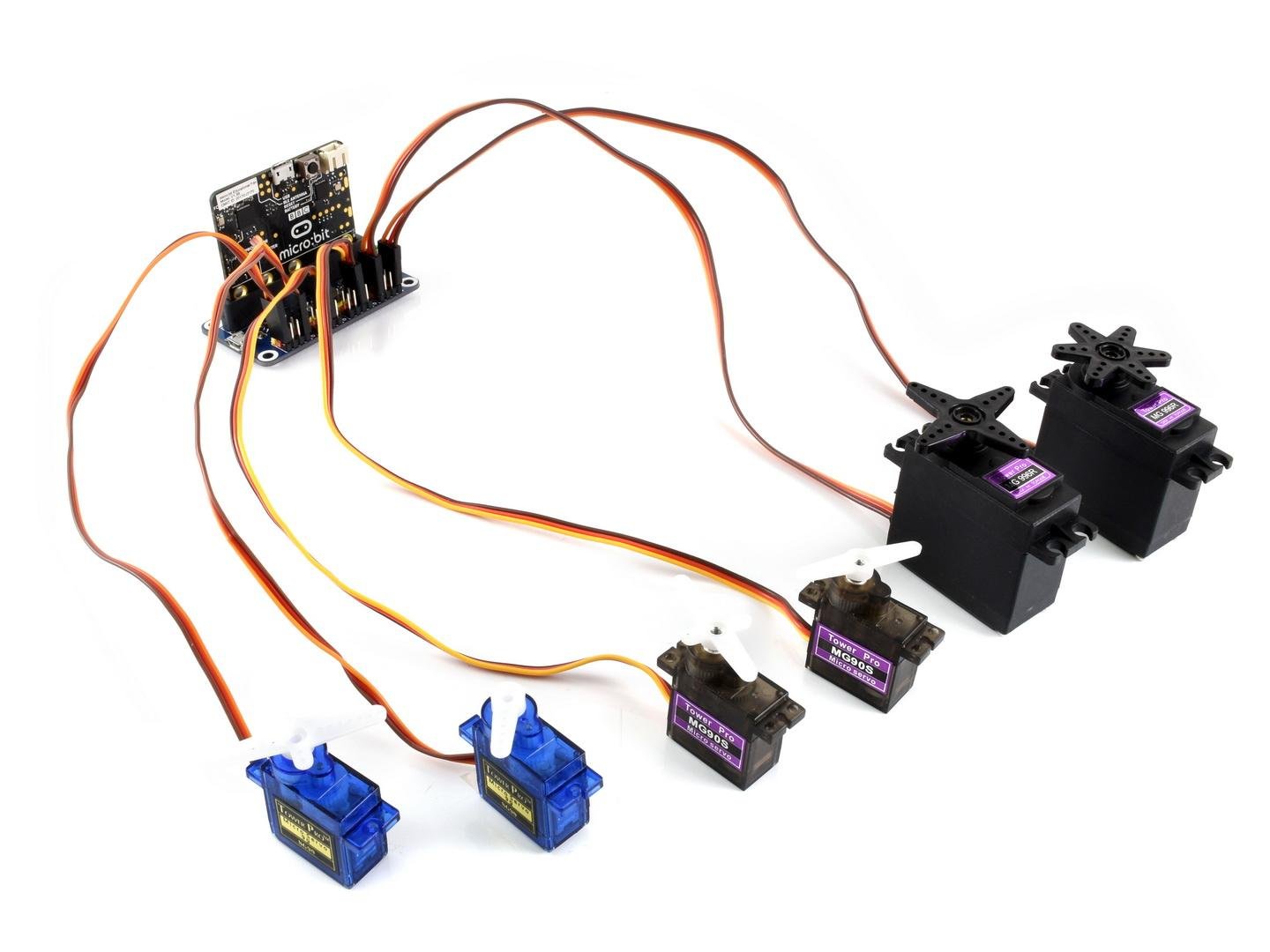
Exploring the Mechanisms Behind Pin Micro Servo Drivers
Pin micro servo drivers operate based on a simple yet effective principle that converts electrical signals into precise physical movements. These compact devices utilize a combination of PWM (Pulse Width Modulation) technology and geared mechanisms to achieve their remarkable range of motion. The PWM signal sent from a microcontroller determines the angle of rotation of the servo, allowing for a high degree of control over the position of the attached load.This versatility stems from the servo’s ability to interpret varying pulse widths and translate them into specific rotational positions, making them ideal for applications in robotics, art projects, and remote-controlled devices.
The ingenuity of pin micro servo drivers is further highlighted by their design features. key components include:
- Control Circuit: Processes incoming signals and regulates motor function.
- Motor: Provides the necessary torque for movement.
- Gear Train: Modulates speed and enhances precision by reducing the motor’s output speed.
- Feedback Mechanism: ensures accuracy by supplying position data to the control circuit.
By understanding the intricate interplay of these components, developers can leverage pin micro servo drivers to create innovative projects that require detailed motion control. Their compatibility with various platforms contrasts significantly with more conventional servos, showcasing the evolution in engineering design that broadens the horizons for makers and hobbyists alike.
Enhancing Project Flexibility with Versatile Servo Applications
In the realm of robotics and automation, the ability to adapt quickly to changing demands is essential. Versatile servo applications play a pivotal role in enhancing project flexibility by allowing for seamless integration and modification of systems. By implementing pin micro servo drivers,developers can achieve precise control over multiple devices,transforming static mechanics into responsive,intelligent systems. These compact drivers not only save space but also provide the inherent flexibility needed to accommodate a diverse array of projects,ranging from hobbyist builds to complex industrial apparatus.
Key benefits of utilizing pin micro servo drivers include:
- Compact Design: Minimized footprint facilitates integration into tight spaces.
- Precision Control: Fine-tuning of movements ensures perfect alignment and operation.
- Energy Efficiency: Lower power consumption leads to extended operational time.
- Cost-Effectiveness: Affordable options make advanced automation accessible to all.
Moreover, teams can rapidly prototype and iterate on their designs without the need for extensive hardware overhauls.Here’s a simplified comparison of traditional servo drivers and pin micro servo drivers:
| Feature | Traditional Servo Drivers | Pin Micro Servo Drivers |
|---|---|---|
| Size | Bulkier | Compact |
| Control Precision | Moderate | High |
| Power Usage | Higher | Lower |
| Cost | Higher | Lower |
Selecting the Right Pin Micro servo Driver for Your Needs
Choosing the right pin micro servo driver can significantly enhance the functionality and efficiency of your projects.It’s essential to evaluate several factors to ensure you select a driver that aligns with your specific requirements. Consider the following elements:
- Voltage Rating: Ensure the servo driver matches the voltage requirements of your servo motors.
- Control Type: Determine whether you need PWM, I2C, or analog control to best fit your submission.
- Current Rating: Select a driver capable of providing enough current without overheating and compromising performance.
- Size and Form Factor: Think about the physical dimensions, especially if space is limited in your project.
Another crucial aspect to weigh is the number of channels the driver supports, as this will dictate how many servos you can control together. Examine the compatibility with your microcontroller or advancement board, ensuring seamless integration. In addition, many modern drivers offer features such as feedback systems and programmable settings, which enhance the adaptability of your setup. A comparative table below highlights some top contenders:
| Driver model | Voltage Range | Channels | Control Type |
|---|---|---|---|
| Driver A | 4.8 – 6V | 8 | PWM |
| Driver B | 5 – 12V | 16 | I2C |
| Driver C | 3.3 – 6V | 4 | Analog |
Optimizing Performance: Tips for Effective Integration and Usage
To harness the full potential of pin micro servo drivers, it’s essential to focus on both hardware and software integration. Careful wiring is basic; ensure that all connections are secure to avoid signal loss or erratic behavior. Utilizing a dedicated power supply can mitigate voltage drops which may result from multiple servos drawing current simultaneously. Always check specifications for each servo to optimize the PWM signal frequency,allowing for smoother and more responsive movements. After wiring,it’s crucial to test each servo individually to troubleshoot any issues before full integration into your project.
On the software side, implementing efficient libraries can significantly streamline your code and improve performance. Using Arduino’s built-in libraries or third-party options can simplify the control process and free you up from low-level coding complexities. To maximize versatility, consider creating custom functions that handle various servo positions, allowing for more nuanced control in complex projects. Additionally, employing methods like callback functions or interrupts can definitely help manage tasks without blocking main application processes, ensuring your system runs efficiently even under demanding conditions.
Q&A
Q: What is a pin micro servo driver and how does it work?
A: A pin micro servo driver is a compact and efficient electronic device that controls the position of micro servos. Servos are small motors that can be precisely positioned to a specific angle, making them essential in robotics, model-making, and various DIY projects.the driver translates control signals—typically from a microcontroller—into movement commands for the servo, allowing for smooth and accurate adjustments in real time.
Q: What advantages do pin micro servo drivers offer over traditional servo controllers?
A: Pin micro servo drivers unlock a new realm of versatility due to their compact size, ease of integration, and cost-effectiveness. Unlike traditional controllers, which may require complex setups and additional components, pin micro servo drivers simplify the process with straightforward connections and fewer overall parts. They often require minimal programming,allowing hobbyists and professionals alike to quickly harness their functionality for a wide array of applications.
Q: In what applications are pin micro servo drivers commonly used?
A: Pin micro servo drivers find myriad applications across various fields. They are commonly utilized in robotics for joint movement, in model aircraft for rudder and aileron control, and in automated systems for precise mechanical tasks. Beyond these uses,they are often found in hobbyist projects like robotic arms or interactive exhibits. Their versatility extends even to art installations where movement is an integral part of the display.
Q: Can you explain the importance of versatility in micro servo drivers?
A: Versatility is crucial in micro servo drivers because it broadens the scope of projects that can incorporate them. Whether you’re building a simple mechanical device or a complex robotic system,having a driver that can adapt to different servos and configurations enhances creativity and innovation.This flexibility not only streamlines the development process but also promotes experimentation, paving the way for new ideas and technological advancements.
Q: How can one get started using pin micro servo drivers?
A: Getting started with pin micro servo drivers is approachable for enthusiasts of all levels. First, select a micro servo and a suitable driver based on your project requirements. Next, familiarize yourself with the connection schematics, which are often available in documentation or online resources. Programming can be done using popular platforms like Arduino, where sample codes provide a helpful starting point. Many tutorials and community forums exist to guide beginners through their first projects, ensuring a smooth introduction to this technology.
Q: Are there any limitations to consider when using pin micro servo drivers?
A: While pin micro servo drivers are quiet versatile and powerful, they do have some limitations. Maximum load capacity is one factor; exceeding the specifications of your servo can lead to malfunction or damage. Additionally, the range of motion for servos is typically restricted to 180 degrees or less. For more complex movements requiring continuous rotation or broader angles, other types of actuators may be more appropriate. it’s also significant to note that power supply is critical—insufficient power can affect performance.
Q: What future developments can we expect in the realm of pin micro servo drivers?
A: The future of pin micro servo drivers is promising, with advancements likely in miniaturization, efficiency, and compatibility with emerging technologies. As the demand for smart robotics and iot (Internet of Things) applications grows, integration with wireless interaction and intelligent processing will become more commonplace. We can also anticipate improvements in energy consumption and adaptability that will further enhance their usability across diverse industries.
Q: What resources are available for learning more about pin micro servo drivers?
A: A plethora of resources are available for those interested in delving deeper into pin micro servo drivers. Online platforms like manufacturer websites, forums, and community-driven sites provide extensive documentation, tutorials, and project ideas. Books on robotics and electronics frequently enough include dedicated sections on servo control. Additionally,video content across platforms like YouTube can give visual learners an engaging way to grasp the concepts and applications of these versatile devices.
To Conclude
the realm of pin micro servo drivers unveils a captivating tapestry of versatility and innovation. as we have explored, these compact marvels possess the remarkable ability to bridge the gap between simplicity and sophistication, empowering creators to breathe life into their projects with unparalleled precision. Whether you are a seasoned engineer or a curious hobbyist,embracing the potential of these drivers can unlock a world of possibilities,transforming your ideas into tangible realities. As technology continues to evolve, keeping an eye on advancements in servo control will undoubtedly inspire new applications and creative solutions across various fields. So, as you embark on your next project, remember that the key to unlocking versatility lies not just in the components you choose, but in your creativity and vision. Let the power of pin micro servo drivers guide you toward your innovative aspirations.