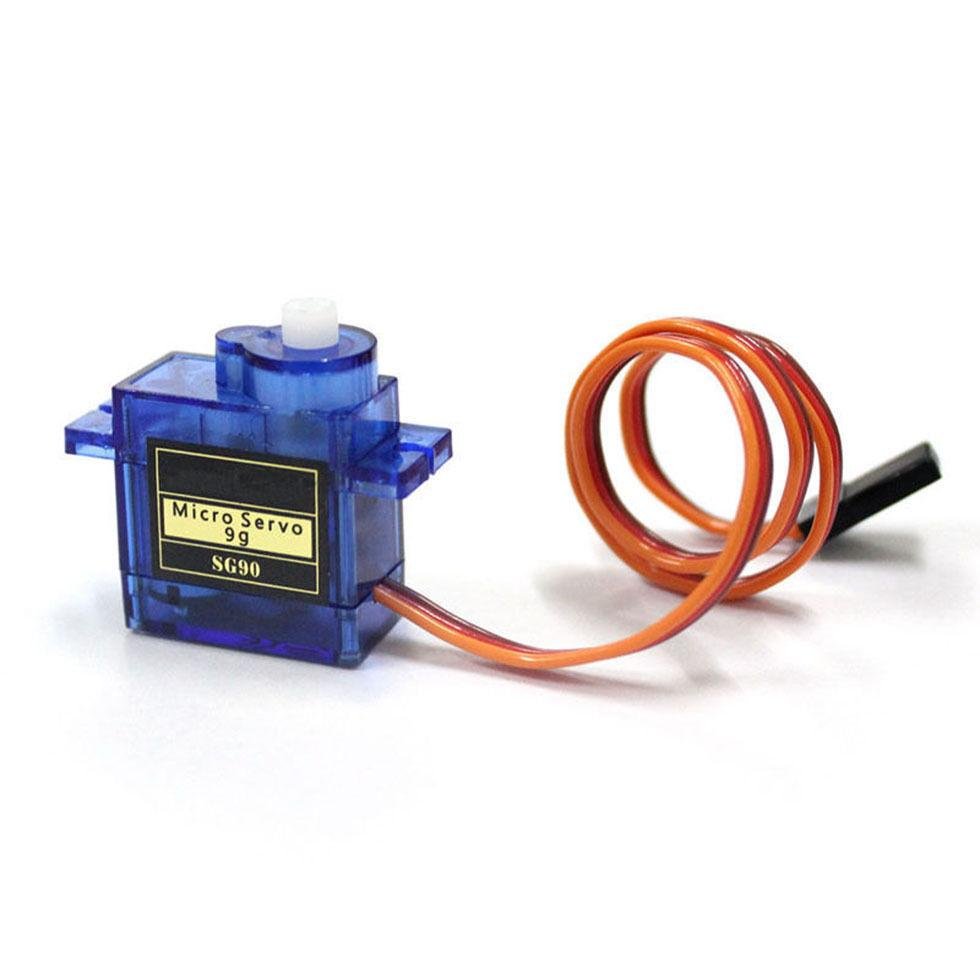
In the ever-evolving landscape of technology, the quest for precision and versatility has become paramount.As industries strive to enhance efficiency and performance, the emergence of innovative solutions is reshaping the way we approach complex tasks. Among these groundbreaking advancements is the micro servo driver— a compact yet powerful component that promises to revolutionize the realm of automation and robotics. With its ability to deliver meticulous control in various applications, the micro servo driver stands as a testament to the intricate dance between engineering ingenuity and precise execution. This article will delve into the capabilities and applications of this remarkable device, unveiling how it can unleash new levels of precision across a wide spectrum of fields, from hobbyist projects to industrial automation. Join us as we explore the versatility of the micro servo driver and its impact on the future of technology.
Table of Contents
- Understanding Micro Servo Drivers and Their functionality
- Key Features to Consider for Optimal Performance
- Applications and Innovations in Micro servo Technology
- Best Practices for Integrating Micro Servo Drivers in projects
- Q&A
- Wrapping Up
Understanding Micro Servo Drivers and Their Functionality
Micro drivers/” title=”Diamond Plus Series Pin Servo Drivers”>servo drivers are compact yet powerful devices that facilitate precise control over small servo motors, enabling them to perform a variety of tasks. These drivers convert control signals into mechanical motion, translating input commands into corresponding movements. Their versatility is what makes them popular in numerous applications, from robotics and automation to hobby projects and model applications. By managing the angle and speed of the servo motors, micro servo drivers offer users unparalleled capability to execute intricate maneuvers.
One of the moast critical aspects of micro servo drivers is their functionality in closed-loop control systems. When implemented, these systems consistently monitor feedback from the servo to adjust its position and ensure it meets the designated set point. This feedback mechanism enhances precision and reduces the chances of error during operation. Moreover, with options for different signal types like PWM (Pulse Width Modulation) or analog voltage, micro servo drivers maintain compatibility with various controllers, making them a flexible solution for developers.
To further illustrate the nuances of micro servo drivers, consider their key features:
| Feature | Description |
|---|---|
| Size | Compact design suitable for tight spaces |
| Control Signal | Compatible with PWM and analog inputs |
| Torque | Delivers high torque for demanding applications |
| Feedback Mechanism | Real-time position tracking for enhanced accuracy |
With their unique blend of features, micro servo drivers stand out in the field of motion control technology. Their ability to provide reliable performance while adapting to different project requirements makes them an essential component for both enthusiasts and professionals alike. The integration of these drivers into various systems marks a significant stride towards achieving automated precision.
Key Features to Consider for Optimal performance
When selecting a micro servo driver, precision control is paramount. Modern micro servo drivers often feature advanced algorithms that maximize the accuracy of servo movements. Ensure the driver you choose supports high-resolution feedback systems, as this will allow for finer motor control and improved performance in various applications. Look for specifications that indicate the driver’s responsiveness and tuning capabilities to adapt to specific operational demands.
another crucial aspect to consider is compatibility with a variety of microcontrollers. A versatile micro servo driver should seamlessly integrate with different platforms, whether it’s Arduino, Raspberry pi, or others. Check for firmware options that allow for easy programming and customization. This flexibility enhances your ability to experiment with various projects, from robotics to automated systems, making the driver a cornerstone of your toolkit.
Lastly, load capacity and thermal management can substantially influence your driver’s performance over time.It’s essential to analyze the driver’s specifications regarding the maximum torque it can support comfortably without overheating.Look for features such as integrated heat sinks or thermal cutoff features to prolong the life of your components. A solid table representation of load capacities can definitely help you make informed decisions:
| Driver Model | Max Load (kg) | Operating Temperature |
|---|---|---|
| Model A | 5 | -20°C to 60°C |
| Model B | 10 | -10°C to 65°C |
| Model C | 3 | -30°C to 50°C |
Applications and Innovations in Micro Servo Technology
Micro servo technology has revolutionized numerous industries by offering a compact yet powerful solution for precision control.These tiny yet efficient devices find applications in areas such as robotics,model aircraft,and automated manufacturing. Their ability to operate with high accuracy and responsiveness allows for intricate movements that were previously arduous to achieve. As a result, engineers and designers are increasingly integrating micro servos into their projects, leading to innovative designs that push the boundaries of what is possible.
In the realm of consumer electronics, micro servos are transforming products by providing enhanced functionality in a small form factor. As a notable example, smart home systems utilize these miniature motors to control devices such as blinds, cameras, and lighting systems with remarkable precision.Innovations such as wireless control and integration with IoT devices further enhance their appeal, enabling seamless operation and user-amiable interfaces. As technology advances, the potential for micro servos to facilitate creativity in everyday devices is limitless.
Moreover, the customization possibilities offered by micro servo technology are fostering innovation in fields like medical devices and artistic installations. In healthcare, they enable the growth of tailored solutions like automated prosthetics and surgical instruments, improving patient outcomes and operational efficiency.In the art world, kinetic sculptures powered by micro servos captivate audiences with their dynamic movements, providing new ways for artists to express concepts. The versatility of micro servo drivers not only enhances performance but also inspires imaginative creations that blend technology and art.
Best Practices for Integrating Micro Servo Drivers in Projects
Integrating micro servo drivers into your projects can significantly enhance precision and control. To achieve the best results, it’s crucial to choose the right driver that not only matches the specifications of your servo but also aligns with the power requirements of your project. Considerations such as current rating, voltage, and pulse width modulation (PWM) compatibility are paramount when selecting a driver. A well-matched driver ensures reliability and improves performance in the long run.
Proper wiring and connections play a vital role in the accomplished implementation of micro servo drivers. Here are some practices to ensure the integrity of your connections:
- Use appropriate gauge wires to handle the required current without overheating.
- Implement secure soldering techniques or use connectors that can handle repetitive connections.
- Keep wire lengths as short as possible to minimize resistance and signal loss.
Once your micro servo driver is connected,calibration and testing are critical steps before full operational deployment.Start with a simple test script to verify that your servo responds correctly to control signals. Gradually increase complexity in your tests by introducing various control algorithms or PWM signals. Document your results to establish a reference for future projects. Below is a simple testing table to help you keep track of parameters and outcomes:
| Test No. | PWM Signal (ms) | Servo Position (Degrees) | Response Observed |
|---|---|---|---|
| 1 | 1.0 | 0 | Stationary |
| 2 | 1.5 | 90 | Moved Right |
| 3 | 2.0 | 180 | Moved Left |
Q&A
Q&A: Unleashing Precision – The Versatile Micro Servo Driver
Q1: What is a micro servo driver, and why is it significant in today’s technology landscape?
A1: A micro servo driver is an electronic component designed to control the motion of micro servos, which are small, precise motors used in various applications ranging from robotics to model aircraft. Its meaning lies in its ability to provide accurate control over angular position, speed, and acceleration, making it an essential tool in fields requiring precision and versatility—such as automation, engineering, and interactive art.
Q2: How does a micro servo driver differ from other types of servo drivers?
A2: While traditional servo drivers may handle larger motors or provide basic on/off control, micro servo drivers are specifically calibrated for the nuanced demands of smaller servos. They excel at fine-tuning delicate movements, enabling more complex behaviors in robotics and remote-controlled devices. Their compact design also means they can be easily integrated into tight spaces without sacrificing performance.
Q3: What are some key features of a high-quality micro servo driver?
A3: A high-quality micro servo driver should exhibit features such as:
- Precision Control: Ability to provide minute adjustments in angle and speed.
- Compatibility: Support for various micro servo brands and models.
- Customizability: Options for programming and fine-tuning settings to fit specific applications.
- Feedback Mechanisms: Sensors to relay real-time data about position and performance.
- Compact Size: Efficient design for easy installation in constrained environments.
Q4: In what applications can we find micro servo drivers being utilized?
A4: Micro servo drivers find their place in numerous applications, including:
- Robotics: For arm movement in robotic systems and hobby projects.
- Drones and UAVs: For stabilizing cameras and controlling flight mechanisms.
- Automated Model Makers: In scale models for trains, cars, and other vehicles.
- Toys: Enhancing the functionality and interactivity of remote-controlled toys.
- Theatre and art Installations: For kinetic sculptures and programmable animations.
Q5: What advantages do micro servo drivers offer over traditional motor drivers?
A5: Micro servo drivers provide a range of advantages, such as:
- Granular Control: Offering high-resolution adjustments that traditional motor drivers may lack.
- Energy Efficiency: Consuming less power while achieving high levels of performance, beneficial in battery-operated devices.
- Reduced Complexity: Often simpler to integrate due to standardized input signals and operation.
- Cost-Effectiveness: Typically more affordable than larger motor systems, making them accessible to hobbyists and professionals alike.
Q6: How can beginners get started with using a micro servo driver?
A6: Beginners can start by understanding the basics of wiring and circuit design. Here are some steps to guide them:
- choose a Micro Servo Driver: Research and select a driver compatible with the servos you intend to use.
- gather Components: Obtain necessary parts like servos, power supplies, and a microcontroller.
- Learn to Program: Familiarize yourself with the software tools needed to control the driver.
- Start Small: Begin with simple projects, like controlling a single servo for basic tasks, before gradually advancing to more complex systems.
- Join Communities: Engage with online forums and resources to share experiences and seek advice from fellow enthusiasts.
Q7: What future developments can we expect in micro servo driver technology?
A7: The future of micro servo driver technology is likely to see advancements such as:
- Enhanced Algorithms: Improved processing capabilities for better real-time control and feedback.
- Integration with AI: Utilizing artificial intelligence for more autonomous behavior in robotics.
- Wireless Capabilities: Development of wireless dialogue for more flexible control schemes.
- Eco-Friendly Designs: Focus on sustainable materials and energy-efficient operations to meet growing environmental concerns.
Conclusion
The versatility and precision of the micro servo driver make it a crucial player in the world of modern technology.As developments continue to unfold, its potential applications are bound to expand, making it an exciting field for both enthusiasts and professionals alike.
Wrapping Up
As we draw the curtain on our exploration of the versatile micro servo driver, it becomes clear that this compact powerhouse is more than just a cog in the machine. It embodies the harmony of precision and adaptability, offering an array of possibilities for hobbyists, engineers, and inventors alike.From robotics and automation to delicate artistic projects, the micro servo driver invites creativity to intertwine with technology, enhancing our ability to bring ideas to life with impeccable accuracy.
In a world where innovation continues to accelerate, embracing tools like the micro servo driver is essential for anyone looking to push boundaries. Its flexibility and performance are a reminder that sometimes,the smallest components can make the most significant impact. As you venture forth, may you harness the potential of this remarkable device and continue to explore the uncharted territories of your inventiveness. The journey of creation is ever-evolving, and with the right tools in hand, the possibilities are truly limitless. Happy innovating!