
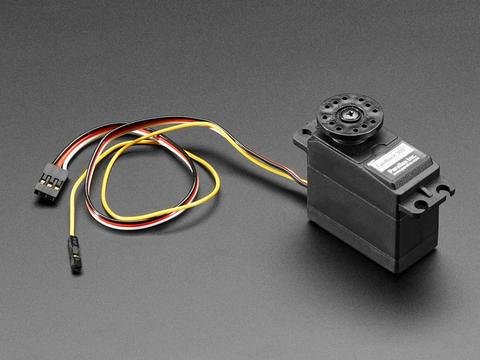
Unleashing Precision: Exploring Pin Micro Servo Drivers
In a world where precision is paramount, the subtle art of motion control has emerged as a crucial player in various fields, from robotics to aerospace. Among the unsung heroes of this intricate ballet of mechanics are pin micro <a href="https://ydservo.com/product/diamond-plus-series-pin-servo–drivers/” title=”Diamond Plus Series Pin Servo Drivers”>servo drivers—tiny yet powerful devices that transform electrical signals into controlled, precise movements. these miniature marvels not onyl enable intricate mechanisms but also unlock new possibilities in innovation adn creativity. As we delve into the realm of pin micro servo drivers, we will explore their design, functionality, and applications, shedding light on how they contribute to the seamless operation of various modern technologies. Join us on this journey to understand how these little wonders are paving the way for greater accuracy and finesse in motion control systems.
Table of Contents
- Understanding the Mechanics of Pin Micro Servo Drivers
- Optimizing Performance for Precision Tasks
- Integrating Pin Micro Servo Drivers into DIY Projects
- Best Practices for Maintenance and Troubleshooting
- Q&A
- In Conclusion
Understanding the Mechanics of Pin Micro Servo Drivers
Pin micro servo drivers act as the connective tissue between your control signals and the physical movements of your miniature servos. These drivers are crucial in translating the digital signals into precise mechanical actions, ensuring that every command delivers an exact response. The underlying mechanics of these drivers utilize pulse width modulation (PWM) to control the angle of the servo. By varying the width of the pulse sent to the servo motor, the driver accurately determines the motor’s position within its defined range, allowing you to achieve remarkable precision in robotics, models, and other applications.
understanding the technical specifics of these drivers enhances one’s ability to manipulate them effectively. For instance, common specifications to consider include:
- voltage Rating: most pin micro servo drivers operate within a specific voltage range, usually between 4.8V to 6V.
- Torque Rating: This indicates the force the servo can exert, which is essential for ensuring it can move or hold loads.
- Response Time: The time it takes for the servo to react to a given pulse, influencing the speed of movement.
The compatibility of pin micro servo drivers with microcontrollers enhances their functionality and versatility.These drivers frequently enough come with specific pin configurations that are designed to align with standard GPIO (General-Purpose Input/Output) pins on various microcontroller platforms.
| Driver Model | Voltage (V) | Torque (kg-cm) | Response Time (ms) |
|---|---|---|---|
| MG90S | 4.8-6.0 | 2.5 | 0.1 |
| SG90 | 4.8-6.0 | 1.5 | 0.1 |
| DS3218 | 6.0-7.4 | 20.0 | 0.1 |
Optimizing performance for Precision Tasks
Achieving optimal performance in precision tasks requires a nuanced understanding of the underlying mechanics of pin micro servo drivers. Fine-tuning these components ensures they respond accurately to minute control inputs, which is critical for applications that depend on exact movements. Some of the essential factors to consider include:
- Calibration: Regular recalibration of the servo drivers can considerably enhance precision. By periodically adjusting the endpoints and ensuring the null position is accurate, you can reduce drift and improve response times.
- Feedback Systems: Incorporating real-time feedback systems,such as encoders,allows for adjustments during operation,ensuring that the servo stays on track even in dynamic environments.
- PID Tuning: Utilizing PID (Proportional, Integral, Derivative) controllers can definitely help maintain stability in movement. Fine-tuning these parameters can result in smoother operation and quicker response to positional errors.
another critical aspect is the selection and use of appropriate drives and power sources. Ensuring that your pin micro servo drivers are matched with the correct voltage and current ratings helps to prevent the risk of overheating and performance degradation. Consider these key parameters:
| Parameter | Ideal Specification | Impact on Performance |
|---|---|---|
| Operating Voltage | 4.8V – 6V | Ensures efficient torque and speed. |
| Load Capacity | 1.5 kg-cm | Affects the precision of movements under load. |
| Response Time | <1s for full rotation | Quicker response enhances overall performance. |
the design and assembly of the mechanical systems that leverage pin micro servo drivers also play a pivotal role in optimizing performance. Any misalignments,excessive friction,or structural weaknesses can introduce variability in precision tasks. Here are a few strategies to consider:
- Precision Machining: Use high-accuracy components to minimize tolerances and enhance overall system integrity.
- Lubrication: Regularly maintain mechanical parts to reduce friction,allowing for smoother operation.
- Alignment and Stability: Ensure that servo mounts and linkages are aligned correctly to prevent unnecessary wear and improve consistency in performance.
Integrating Pin Micro Servo Drivers into DIY Projects
When embarking on a DIY project, integrating pin micro servo drivers can elevate your creation from mundane to remarkable.These compact drivers provide the precision necessary for precise movement control, making them an ideal choice for robotics, animatronics, and various automated systems. To get started, consider the project requirements and choose the appropriate servo based on factors like size, torque, and range of motion. Properly aligning these servos is key, as even minor misalignments can result in significant deviations in functionality.
To seamlessly incorporate pin micro servo drivers, you’ll need to establish a reliable power source and connection points. Utilize a breadboard for prototyping, allowing for easy adjustments and testing. Connect the servos to a microcontroller or a signal generator,ensuring that the pin configuration matches the controller’s output.It’s also essential to make use of the built-in libraries in your programming environment, which can simplify control commands and enhance the overall user experience.
| Component | function | Notes |
|---|---|---|
| Micro Servo | Delivers precise control | Compact and lightweight |
| Microcontroller | Processes inputs and controls servos | Recommended: Arduino or Raspberry Pi |
| Power supply | Powers the servo | Ensure adequate voltage & current |
| Connecting Wires | facilitates connections | Use color-coded wires for clarity |
With proper planning and attention to detail, you can integrate pin micro servo drivers into your projects with ease. Experimentation is key, so don’t hesitate to modify and refine your design as you uncover the capabilities of these versatile components.Whether it’s adding articulation to a model, creating a robotic arm, or automating a simple mechanism, the potential applications are virtually limitless, providing an exciting avenue for creativity and innovation.
Best Practices for Maintenance and Troubleshooting
Maintaining and troubleshooting your pin micro servo drivers can significantly enhance their lifespan and performance. To start, it’s essential to regularly inspect connections and wiring. Loose connections can lead to intermittent functionality, so make sure to secure all wiring and perform visual checks for any signs of wear or damage. consider creating a maintenance schedule where you evaluate the integrity of the connections, ensuring they remain tight and free from corrosion.
Another crucial aspect of maintenance involves keeping the drivers clean. Dust and debris can disrupt the operation of pin micro servo drivers, especially in high-usage environments. Use a soft brush or compressed air to carefully remove dust from the surfaces and vents.Additionally, preventing moisture buildup is vital, as it can lead to short circuits.Store your equipment in a controlled environment when not in use, ideally with humidity levels monitored.
| Issue | Possible Cause | Solution |
|---|---|---|
| Unresponsive Servo | Loose connection | Check and tighten all wires |
| Erratic Movement | Insufficient power supply | Verify voltage and current ratings |
| Burnt Out Motor | Overheating | Ensure proper cooling and avoid prolonged use |
When troubleshooting, adopting a systematic approach can save time and reduce frustration. Start by eliminating power supply issues, as these are frequently enough the root of malfunctioning drivers. Use a multimeter to measure the output voltage and ensure it aligns with the specifications of the micro servo. If the power supply checks out, move on to verify the firmware or code being used. Sometimes, programming errors can manifest as hardware issues, so confirm that your code is correctly implementing control commands.
Q&A
Q&A: Unleashing Precision – Exploring Pin Micro Servo Drivers
Q1: What are pin micro servo drivers,and how do they differ from conventional servo drivers?
A1: Pin micro servo drivers are compact and highly efficient devices designed to control small servo motors with precision. Unlike traditional servo drivers, which might potentially be larger and less focused on intricate movements, pin micro servo drivers are tailored for applications that require tight positioning and minimal response latency.This makes them ideal for projects involving robotics, drones, and miniature automations, where space and accuracy are paramount.
Q2: What are some typical applications for pin micro servo drivers?
A2: Pin micro servo drivers find their niche in a variety of applications, especially where size and precision are critical. Common uses include robotic arms, miniature vehicles, animatronics, RC models, and artistic installations. Their lightweight and compact nature enables them to be integrated into devices where conventional servo systems might be too bulky or impractical.
Q3: What advantages do pin micro servo drivers offer in terms of performance?
A3: One of the standout advantages of pin micro servo drivers is their impressive torque-to-weight ratio. They provide smooth and accurate movements while consuming minimal power, making them efficient for battery-operated devices. Additionally, many models come equipped with advanced feedback systems, allowing for real-time adjustments that enhance precision and control, which is crucial for complex tasks.
Q4: How can hobbyists and engineers effectively implement pin micro servo drivers in their projects?
A4: For hobbyists and engineers, implementing pin micro servo drivers is straightforward. most drivers come with user-kind documentation and wiring diagrams to guide setup. Platforms like Arduino or Raspberry Pi can easily interface with these drivers, allowing users to write simple scripts to control movements. Additionally, online forums and communities offer valuable resources and project ideas that can inspire creativity and expansion of knowledge.Q5: Are there any challenges associated with using pin micro servo drivers?
A5: While pin micro servo drivers offer many advantages, challenges do exist. Users may encounter difficulties related to the calibration and tuning of the drivers to achieve optimal performance. Ensuring compatibility with specific servo motors and understanding torque requirements is critical to prevent mechanical failures. Moreover, as these drivers are compact, heat dissipation in high-load scenarios can also be a concern, necessitating careful design considerations.
Q6: What does the future hold for pin micro servo drivers?
A6: The future of pin micro servo drivers looks promising as the need for precision control in various fields continues to grow. As technology advances, we can expect enhanced features such as improved connectivity (like Bluetooth and Wi-Fi capabilities), greater integration with AI for dynamic adaptability, and the development of even smaller and efficient models. These innovations will further unlock creative possibilities in industries ranging from consumer electronics to advanced robotics,solidifying the role of pin micro servo drivers in the future of automation.Q7: Where can one find more data or purchase pin micro servo drivers?
A7: There are numerous reputable online retailers and electronics suppliers that offer a wide range of pin micro servo drivers. Websites like Amazon, Digi-Key, and SparkFun provide detailed product descriptions, specifications, and customer reviews. Additionally, manufacturers frequently enough have extensive resources on their official sites, including datasheets and submission notes, which can definitely help users make informed decisions based on their project needs.
In Conclusion
the realm of pin micro servo drivers stands as a testament to the ingenuity and precision of modern engineering. As we’ve explored,these compact yet powerful components unlock a world of possibilities,enhancing everything from robotics to intricate models. Their ability to translate minute electrical signals into precise mechanical movements exemplifies the harmony of functionality and innovation. As technology continues to evolve, so too will the applications and efficiencies of pin micro servo drivers, inviting creators and engineers alike to imagine new horizons. Whether you’re a hobbyist or an industry professional, understanding and harnessing the capabilities of these devices will undoubtedly propel your projects into a new dimension of precision and reliability. The journey of innovation is never-ending, and with tools like pin micro servo drivers at our disposal, the future is radiant and full of potential.