
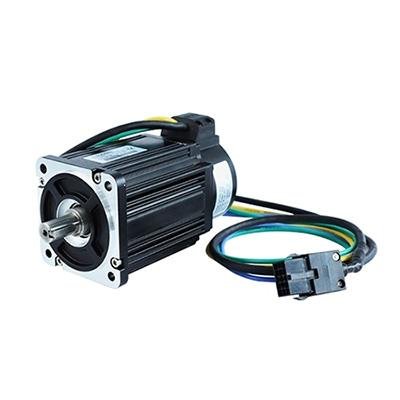
In the ever-evolving landscape of modern automation and robotics, low-voltage direct current (DC) <a href="https://ydservo.com/product/diamond-plus-series-pin-servo-drivers/” title=”Diamond Plus Series Pin Servo Drivers”>servo drivers are emerging as unsung heroes, quietly powering the precision and efficiency that our technological age demands. As industries seek to optimize performance while minimizing energy consumption, a wave of innovative designs and cutting-edge technologies are breathing new life into these essential components. From enhancing motion control in manufacturing processes to enabling more responsive and agile robotic systems, low-voltage DC servo drivers are at the forefront of a quiet revolution. This article delves into the latest advancements in this field, uncovering how these innovations are reshaping applications across various sectors, from aerospace to industrial automation. Join us as we explore the intricacies and implications of these advancements, shedding light on a pivotal yet often overlooked element of contemporary engineering.
Table of Contents
- Emerging Technologies Shaping Low-Voltage DC Servo Drivers
- Enhancing Performance Through Advanced Control Algorithms
- Sustainability and Energy Efficiency in Modern Servo Solutions
- A Guide to Selecting the Right low-Voltage DC Servo Driver for Your Application
- Q&A
- Wrapping Up
Emerging Technologies Shaping Low-Voltage DC Servo Drivers
In the rapidly evolving landscape of automation, low-voltage DC servo drivers are experiencing transformative advancements driven by a range of emerging technologies. Artificial Intelligence (AI) is at the forefront, enabling predictive maintenance and optimizing performance by analyzing real-time data from servo systems.This integration allows for self-tuning control algorithms that adjust parameters dynamically,enhancing precision and efficiency. Additionally, the incorporation of machine learning is facilitating smarter interfaces that can learn from historical data to improve decision-making processes consistently.
Another notable growth in this sector is the enhancement of interaction protocols that promote interoperability among various devices within automated systems. With the advent of IoT (Internet of Things), low-voltage DC servo drivers are becoming more interconnected, allowing for seamless data exchange. Protocols like CAN (Controller Area Network) and EtherCAT are increasingly being adopted, enabling real-time control and more elegant system architectures.This shift not only enhances the capabilities of servo drivers but also improves their adaptability to different operational environments.
Moreover, the push for energy efficiency and sustainability has led to innovations in power management technologies, focusing on reducing the energy footprint of servo systems. Key developments include the use of high-efficiency semiconductor materials and innovative power electronics designs. These advancements contribute to lower heat generation and increased lifespan of servo drivers, aligning with the growing demand for environmentally pleasant solutions in industrial applications. Consequently, manufacturers are now able to create compact, lightweight options without compromising performance.
Enhancing Performance Through Advanced Control Algorithms
In recent years, the evolution of advanced control algorithms has revolutionized the capabilities of low-voltage DC servo drivers.these algorithms are designed to optimize performance by providing precise control over motor operations, enhancing responsiveness and accuracy in applications ranging from robotics to automation systems. By leveraging sophisticated techniques such as adaptive control, fuzzy logic, and model predictive control, manufacturers can achieve smoother motion profiles and minimize errors associated with load variations.
One of the key benefits of integrating advanced control algorithms is their ability to adapt to dynamic operating conditions. These algorithms continuously analyze feedback data to make real-time adjustments, ensuring that the motor maintains optimal performance nonetheless of external factors. The following features showcase how these algorithms enhance system efficiency:
- Improved Positioning Accuracy: Fine-tuned algorithms reduce overshoot and settling time.
- Enhanced Torque Control: Consistent output across varying operational loads.
- Energy Efficiency: reduction in power consumption through optimal control of motor currents.
To illustrate the impact of these innovations,here is a comparison of customary control methods versus advanced algorithms in the context of servo driver performance:
| Aspect | Traditional Control | Advanced Control algorithms |
|---|---|---|
| response Time | higher | Lower |
| Error Margin | Greater | Minimal |
| Flexibility | Limited | High |
Sustainability and Energy Efficiency in Modern Servo Solutions
In the rapidly evolving landscape of motion control,the integration of sustainability practices into servo solutions is becoming increasingly crucial. Modern low-voltage DC servo drivers are engineered with energy efficiency in mind, enabling machinery to operate optimally while minimizing electricity consumption. These innovative approaches not only support cost savings for businesses but also contribute to reducing the carbon footprint of industrial operations. The implementation of energy recovery systems in servo drives allows excess energy generated during operation to be fed back into the grid or reused, marking a significant advancement in enduring automation.
Moreover, contemporary servo solutions prioritize eco-friendly construction materials that are either recyclable or sourced from sustainable suppliers. This not only reduces the environmental impact of production but also enhances the longevity and durability of components used in these systems. As maintenance requirements diminish and product lifespans extend, the overall waste generated through manufacturing and disposal processes is significantly reduced. Companies are encouraged to adopt these practices, leading to a more circular economy within the automation sector.
For organizations looking to make informed decisions about energy-efficient servo solutions, the following characteristics serve as key indicators of sustainability:
| Feature | Benefit |
|---|---|
| High Efficiency Ratings | Lower energy consumption and operating costs |
| Compact Design | Reduced material usage and easier installation |
| Advanced Control Algorithms | Optimal performance with minimal energy waste |
| Recyclable Materials | Limited environmental impact at end-of-life |
A Guide to Selecting the Right Low-Voltage DC Servo Driver for Your Application
When choosing a low-voltage DC servo driver, it’s essential to consider several key factors that will affect the performance and efficiency of your application. Start by reviewing the current and voltage requirements of your specific motor. Matching the driver’s electrical characteristics to your motor specifications can prevent issues such as overheating and underperformance.Look for drivers that support a range of input voltages to accommodate varying power supply environments.
Another critical aspect is the control methodology used by the servo driver. Depending on your application, you might prefer analog or digital control. Analog control offers simplicity and ease of integration, but digital control systems can provide advanced functionalities, such as improved feedback loops and better precision. Consider your software needs, as some drivers come with integrated programming interfaces, which can greatly simplify the development of custom applications.
pay attention to the communication protocols supported by the servo driver. This is crucial for integration into existing systems. Common protocols such as CANopen, EtherCAT, or RS-485 can enhance interoperability with other devices in your automation network.Refer to the table below for a rapid comparison of different driver options based on these criteria:
| Driver Model | voltage Range (V) | Control Type | Communication Protocol |
|---|---|---|---|
| Model A | 12-24 | Analog | RS-485 |
| Model B | 12-36 | Digital | CANopen |
| Model C | 24-48 | Digital | EtherCAT |
Q&A
Q&A: Exploring the Innovations in Low-Voltage DC Servo Drivers
Q1: What are low-voltage DC servo drivers and why are they vital in today’s technology?
A1: Low-voltage DC servo drivers are specialized devices that control the motion of DC servo motors with precision and efficiency, typically operating within a voltage range of 12V to 48V. They are vital in various applications, such as robotics, automation, and consumer electronics, where accurate movement and energy efficiency are paramount. Innovations in this field contribute to more sophisticated, compact, and responsive systems that enhance overall performance in critical functionalities.
Q2: What are some recent innovations in low-voltage DC servo drivers?
A2: Recent innovations include advancements in control algorithms, such as improved PID tuning techniques and adaptive control schemes that help servo systems react dynamically to changes in load and environment. Additionally, the integration of smart features like diagnostics, communication protocols (such as CAN and Ethernet), and embedded programming capabilities have significantly transformed their usability. Moreover, advancements in semiconductor technology have led to more compact, efficient designs that can handle higher currents without overheating.Q3: How do these innovations impact energy efficiency and performance?
A3: Innovations in low-voltage DC servo drivers have substantially improved energy efficiency by minimizing power losses during operation. Enhanced control algorithms reduce unneeded energy consumption, translating to longer battery life in portable applications and lower energy costs in stationary systems. Performance is also optimized,enabling quicker response times and smoother motion control,which is crucial for high-precision applications in manufacturing and robotics.
Q4: What industries are benefiting from the advancements in low-voltage DC servo drivers?
A4: Various industries are reaping the benefits, including manufacturing, where precision automation is critical, and robotics, where sophisticated movement control is required. The medical field is also leveraging these innovations for applications like robotic surgery and precision therapy delivery devices.Additionally, the consumer electronics industry is utilizing these drivers in drones, cameras, and other handheld devices, enhancing their functionality and user experience.
Q5: Can you explain the role of smart technology in the future of low-voltage DC servo drivers?
A5: Smart technology is poised to revolutionize low-voltage DC servo drivers by enabling them to learn and adapt to their operating environments.Incorporation of artificial intelligence and machine learning algorithms can lead to predictive maintenance, where the driver anticipates potential failures before they occur. This capability will enhance reliability and minimize downtime. Moreover, smart connectivity allows real-time data analysis, enabling better system integration and remote monitoring, thereby increasing overall operational efficiency.
Q6: What challenges do manufacturers face when developing the next generation of low-voltage DC servo drivers?
A6: One significant challenge is balancing performance with heat dissipation and thermal management in compact designs. As drivers become more powerful, effective cooling solutions are necessary to ensure reliability. Additionally, meeting stringent regulatory standards for efficiency and electromagnetic interference poses a challenge. Manufacturers must also navigate the rapid pace of technology advancements, ensuring that new designs remain compatible with evolving industry standards and customer expectations.
Q7: Looking ahead, what can we expect in the evolution of low-voltage DC servo drivers?
A7: The future of low-voltage DC servo drivers appears promising with continued miniaturization and enhanced performance capabilities. We can expect to see more integration of IoT technologies,allowing for seamless connectivity and control from remote devices. Increased focus on sustainability may drive the development of drivers optimized for lower environmental impact, while enhanced AI capabilities will further refine their adaptability and efficiency. the evolution of these drivers will continue to transform industries and enrich user experiences.
Q8: How can readers learn more about the innovations in low-voltage DC servo drivers?
A8: Readers interested in diving deeper can explore industry publications, attend trade shows, and engage with online forums that focus on automation and motion control technologies.Additionally, manufacturers often publish whitepapers and case studies highlighting the latest innovations and applications of low-voltage DC servo drivers, which can be a valuable resource for understanding the state of the art in this rapidly evolving field.
Wrapping Up
As we journeyed through the realm of low-voltage DC servo drivers, it became evident that innovation pulses at the heart of this evolving technology. From enhanced energy efficiency to sophisticated control algorithms, these advancements promise to redefine the capabilities of automation and robotics. As industries continue to integrate smarter solutions into their operations, the importance of low-voltage systems will only grow.
In this exploration, we’ve not only uncovered the technical marvels of servo drivers but also glimpsed the future they herald—one where precision and efficiency work hand in hand to propel modern machinery into new heights. As we look forward to further developments and implementations,the landscape of automation is sure to transform,embracing the challenges and opportunities presented by these remarkable innovations.
the journey of low-voltage DC servo drivers reflects a broader narrative: the relentless pursuit of excellence through technology. Let us continue to observe this field with keen interest,for it holds the promise of revolutionizing how we interact with the world of machinery,shaping the contours of industries yet to be imagined.