
in the intricate dance of modern engineering and robotics, precision serves as the guiding principle that transforms aspiring ideas into tangible realities. Enter micro servo drivers—unsung heroes that orchestrate this delicate ballet with unparalleled finesse. These compact, yet powerful components play a pivotal role in the mastery of motion control, enabling everything from agile miniaturized robotic arms to sophisticated models in automation. As technology continues to advance at a breakneck pace,understanding the nuances of micro servo drivers becomes essential for innovators and hobbyists alike. In this article, we will embark on a comprehensive journey, uncovering the mechanics, applications, and techniques that empower creators to harness the true potential of micro servo drivers. Whether you are a novice seeking to dip your toes into the world of robotics or an experienced engineer aiming to refine your skillset, this exploration promises to illuminate the path toward mastering precision.
Table of Contents
- Understanding the Fundamentals of Micro Servo Drivers
- Essential Features to Look for in micro Servo Drivers
- Optimizing Performance: Tips for Calibration and Control
- Applications and Innovations: Harnessing the Power of Micro Servo Technology
- Q&A
- Final Thoughts
Understanding the Fundamentals of Micro Servo Drivers
At the heart of robotic and mechatronic applications lies a component that often goes unappreciated yet is indispensable: the micro servo driver. These compact devices are essential for controlling micro servos which are small, precision motors utilized in a variety of projects, from hobbyist robotics to professional automation. Understanding their operation is crucial for anyone looking to achieve precision in tasks such as positioning, angling, and moving components accurately. Micro servo drivers translate electrical signals into mechanical movements, enabling the servos to function as intended, thereby providing fine control over movement.
Micro servo drivers operate primarily on a pulse-width modulation (PWM) signal. By sending a specific duration of pulse, servos can rotate to a desired angle within their designated range.This control mechanism allows for smooth and precise positioning of the motor shaft.Key specifications to consider when selecting a micro servo driver include control signal frequency, voltage requirements, and load capacity. Competitive products may offer different features, such as built-in feedback systems that enhance operation based on current movement and positioning data.
When integrating micro servo drivers into your projects, it’s essential to consider the various parameters that influence performance. Here’s a simple overview of critical aspects:
| Parameter | Description | Typical Value |
|---|---|---|
| Control Signal | Type of signal used for control | PWM |
| Voltage Range | Operating voltage for the driver | 4.8V – 6V |
| Response Time | Time taken to respond to input signal | 1 – 10 ms |
by understanding these fundamental aspects, enthusiasts and engineers can better select and implement the right micro servo driver for their unique needs, ensuring that every project achieves the desired level of precision and efficiency.
Essential Features to Look for in Micro Servo Drivers
When selecting a micro servo driver, it’s essential to consider factors that impact performance, compatibility, and ease of use. One of the most critical features is control precision. The right driver should provide fine control over servo position, speed, and acceleration, enabling seamless adjustments for your projects. Look for drivers that support various control protocols, such as PWM, UART, or I2C, to ensure flexibility in integration with your existing systems.
Another vital aspect is voltage rating and power efficiency. Micro servo drivers operate on different voltage levels; drivers compatible with a wide range, typically between 3.3V to 12V, offer greater versatility across various applications. Additionally, pay attention to the power management features of the driver. Options like saturation protection, thermal shutdown, and undervoltage lockout not only safeguard your equipment but also enhance operational efficiency for prolonged use.
don’t overlook the support for multiple servos. Choosing a driver capable of managing multiple servos simultaneously allows for more complex projects without needing multiple drivers, which can be cumbersome. Some high-quality drivers support daisy-chaining and provide onboard programming capabilities for easy updates and settings adjustments. Features such as built-in feedback mechanisms and diagnostic tools greatly enhance usability and troubleshooting efficiency, making your projects more robust and manageable.
Optimizing performance: Tips for Calibration and Control
When working with micro servo drivers, precision is paramount. Calibration is the process of setting up your servo to ensure it responds correctly to inputs. Start with a systematic approach to calibrate your micro servo,focusing on variables such as pulse width,frequency,and voltage. The following steps can definitely help improve your calibration outcomes:
- Determine the Servo range: Identify the full range of motion for your servo. This ensures it can achieve the desired positions without exceeding its mechanical limits.
- Adjust Pulse Width: Use a pulse width of 1ms to 2ms, which typically corresponds to the servo’s minimum to maximum angles.
- Test Responsiveness: Run responsiveness tests by gradually moving through the servo’s range and adjusting pulse widths to find the most efficient settings.
Control adjustments are equally crucial for performance optimization. Once calibrated, focus on how you send signals to the micro servo. implementing feedback loops can substantially enhance control accuracy. Consider the following techniques for enhanced control:
- PID Control: Use Proportional, Integral, and Derivative control algorithms to continuously adjust the input signal, resulting in smoother and more precise movements.
- Dynamic Adjustments: Incorporate live adjustments based on load changes or physical resistance faced during operation; this increases reliability under varying conditions.
- Digital Communication: If your project allows, use digital protocols like I2C or SPI for more accurate signal transmission and reduced interference.
For a clearer understanding of the benefits that can be achieved through proper calibration and control, refer to the table below, highlighting key factors and their impact on performance.
| Calibration Factor | Impact on Performance |
|---|---|
| Pulse Width Adjustment | Improves positional accuracy |
| Frequency Optimization | Reduces response time |
| Feedback Integration | Enhances stability |
Applications and Innovations: Harnessing the Power of Micro Servo Technology
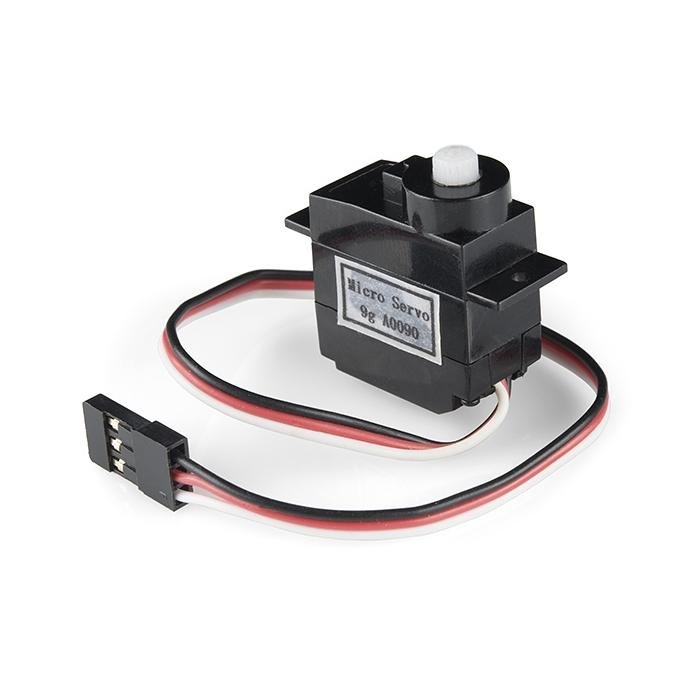
Micro servo technology has found its way into a myriad of applications,revolutionizing industries where precision and compact size are paramount. These miniature motors are the backbone of various domains, including robotics, automation, and electronics. They are especially prominent in hobbyist projects, enabling enthusiasts to create intricate models and mechanisms with unparalleled accuracy. The lightweight design and precise control make them ideal for applications such as:
- Robotic Arms: Allowing delicate movements in assembly tasks.
- Drone Navigation: Enhancing maneuverability for stable flight.
- Remote-Controlled Vehicles: Providing responsive steering and throttle control.
The innovation within micro servo technology doesn’t stop at traditional applications; it inspires cutting-edge developments in fields like medical devices and artificial intelligence. In healthcare, micro servos are employed in robotic surgical tools, providing surgeons with precision that was previously unattainable. Additionally, their use in prosthetics is transforming lives, enabling better mobility and control for users. another groundbreaking area includes:
- Smart home Devices: Automation of curtains, blinds, and door locks.
- Wearable Technology: Assisting in mobility and functionality.
- Entertainment Systems: Creating dynamic displays and effects.
As technology continues to advance, the potential for micro servos seems limitless. their integration with emerging innovations such as IoT (Internet of Things) allows for intricate, synchronized operations that can be controlled remotely. Moreover, in the educational sector, micro servos provide students with hands-on experience in programming and engineering concepts. To illustrate the diversity of their applications,here’s a small table:
| Request Area | Micro Servo Use |
|---|---|
| Robotics | Joint movements in robotic limbs |
| Drones | Stabilizing camera mounts |
| Home Automation | Adjusting smart blinds |
Q&A
Q&A: Mastering Precision – an Introduction to Micro servo Drivers
Q1: What exactly is a micro servo driver,and how does it differ from a regular servo driver?
A1: A micro servo driver is a specialized control mechanism designed to operate micro servos,which are compact servos with lower torque and simpler functionalities compared to regular servos. While standard servo drivers can manage larger, more powerful servos, micro servo drivers focus on the intricacies of smaller motors, allowing for fine-tuned movements and responses with minimal power requirements.
Q2: Why should someone consider using micro servo drivers in their projects?
A2: Micro servo drivers offer unparalleled precision and efficiency for projects requiring delicate movements, such as robotics, drones, and automation systems.Their compact size makes them fitting for environments where space is limited, while their ability to control multiple axes simultaneously allows for intricate designs that demand subtle adjustments. This capability transforms basic ideas into intricate, functional designs.
Q3: What are the typical applications for micro servo drivers?
A3: Micro servo drivers shine in various applications, including robotics (like mini robots and robotic arms), model aircraft for controlling flaps and rudders, and hobby projects such as remote-controlled vehicles. Additionally, they are ideal for smaller automation solutions, such as camera gimbals, toy design, and even practice projects in educational settings for aspiring engineers.
Q4: How do I choose the right micro servo driver for my project?
A4: Selecting the right micro servo driver involves assessing your project’s specific requirements—considering factors such as the torque needed, the desired range of movement, and the operating environment. Carefully evaluate the specifications including voltage compatibility, control protocol, and size constraints. It’s also important to consider integration capabilities with other components or systems in your project for seamless operation.
Q5: can you explain the basic setup process for a micro servo driver?
A5: Setting up a micro servo driver typically involves connecting the driver to a power source,attaching the micro servo,and linking it to a control system (like a microcontroller). Begin by securing power connections to ensure adequate voltage and current flow, then connect the signal wire from the driver to your controller. calibrate the driver by testing the range of motion and making necessary adjustments to the code or settings until the desired performance is achieved.
Q6: What programming languages or tools are commonly used with micro servo drivers?
A6: micro servo drivers can often be programmed using popular languages like Arduino, Python, or C++. Arduino IDE is a prevalent choice due to its user-friendly interface and vast libraries tailored for servo management. For more advanced applications, integrated development environments (IDEs) that support general-purpose programming languages can provide deeper control and flexibility.
Q7: Are there any common challenges people face when working with micro servo drivers, and how can they be overcome?
A7: Common challenges include calibration issues, inconsistent response times, and power supply-related problems. To overcome these, it’s crucial to adhere to proper calibration techniques, ensuring the servo accurately reflects the intended position; maintaining a stable power supply to provide consistent performance; and running tests to identify lag or hiccups in response times. Experimentation and iterative testing are key to mastering the functionality of your micro servo driver.
Q8: What resources are available for beginners wanting to learn more about micro servo drivers?
A8: Numerous online resources cater to beginners, including tutorial videos, forums, and dedicated websites focusing on electronics and robotics. Books and e-books covering fundamental concepts of servos, control systems, and practical projects can also be beneficial. Additionally, engaging with community platforms like Raspberry Pi or Arduino forums can provide insights, troubleshooting tips, and project ideas from experienced users.
This Q&A aims to provide a comprehensive introduction to micro servo drivers, aiding enthusiasts and engineers alike in mastering the precision these tools offer for varied applications.
Final Thoughts
As we conclude our exploration into the intricate world of micro servo drivers, it’s clear that mastering precision isn’t merely a technical challenge but an exhilarating journey into the realm of robotics and automation.With their ability to deliver nuanced control and efficiency, micro servo drivers stand at the forefront of innovation, enabling creators to transform their visions into reality.
Whether you are a seasoned engineer seeking to refine your skill set, or a curious hobbyist eager to embark on your first project, understanding the fundamentals of these devices is crucial. The pathways we’ve outlined in this article serve as both a guide and an invitation—an invitation to experiment, innovate, and harness the power of precision in your creations.
As you venture forward, remember that each project is not just an end in itself but a stepping stone towards deeper understanding and greater achievement. Embrace the challenges that come with mastering micro servo drivers; they are the catalysts that will drive your creativity and inspire your next breakthrough. The future of technology is ever-evolving, and with your newfound knowledge, you are well-equipped to navigate its complexities and contribute to its exciting possibilities. Happy tinkering!